Meta Awareness
Metacognitive Awareness - The 6 Levels of Moral Development!
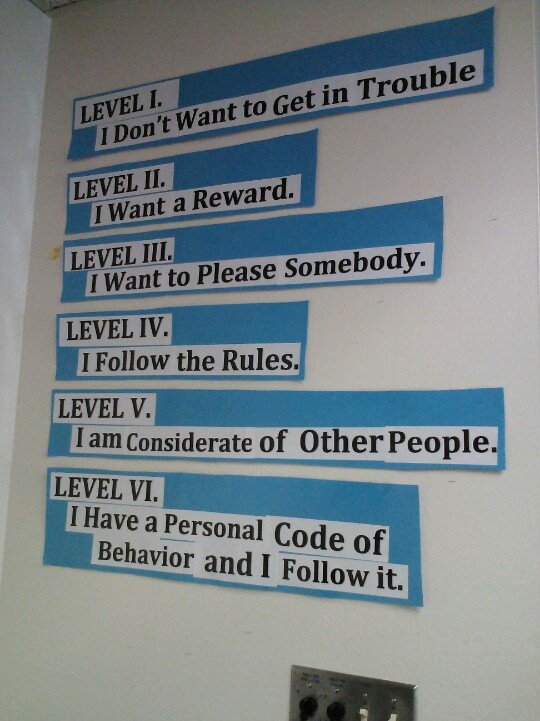
Rafe prompts his students to reflect on their learning to develop not only their critical thinking skills but also to build a strong, positive classroom culture between himself and students, and between students themselves. He does this by integrating self-reflection on their behavior into his lessons daily, using Kohlberg’s 6 Levels of Moral Development.
He introduces the 6 levels on the first day of school and then reinforces them daily. The lowest levels are the smallest numbers, meaning they represent lower levels of moral development.
The 6 levels are:
I do good, because I don’t want to get in trouble
I do good, because I want a reward
I do good, because I want to please someone else
I do good, because the rules say so
I do good, because I am considerate of other people
I do good, because that is my personal code of behavior. It is who I am.
For example, in the middle of analyzing character motives and actions in books like A Separate Peace, he will ask students, “What level is this character on? Why? How do we know that?” And when the school principal initiates a new incentive like popsicle sticks if students achieve a fundraising goal, he’ll ask them again, “What level is that?” They respond, of course, with “Level 2!” By Rafe asking them these questions, he is causing them to reflect on their own thinking, their own motivations. The students investigate why they act the way they do and evaluate whether or not that is the level on which they want to operate. This provides students the practice of metacognition to improve not only their behavior but also their academic performance, as they reflect on who they ultimately want to be and what behaviors align with that; because "most learners need help doing effective monitoring and self-regulation, and they require feedback t verify their self-evaluations. (Sawyer, 32).
“I teach my students about Level 6 in several ways. Since I cannot discuss my own personal codes, I try to help the kids identify them in others. There are any number of outstanding books and films in which the Level 6 individual exists. It’s fun for parents and teachers to find this type of thinker--they’re all over the place once you begin looking.” (Esquith, p. 22)
Comments
Post a Comment